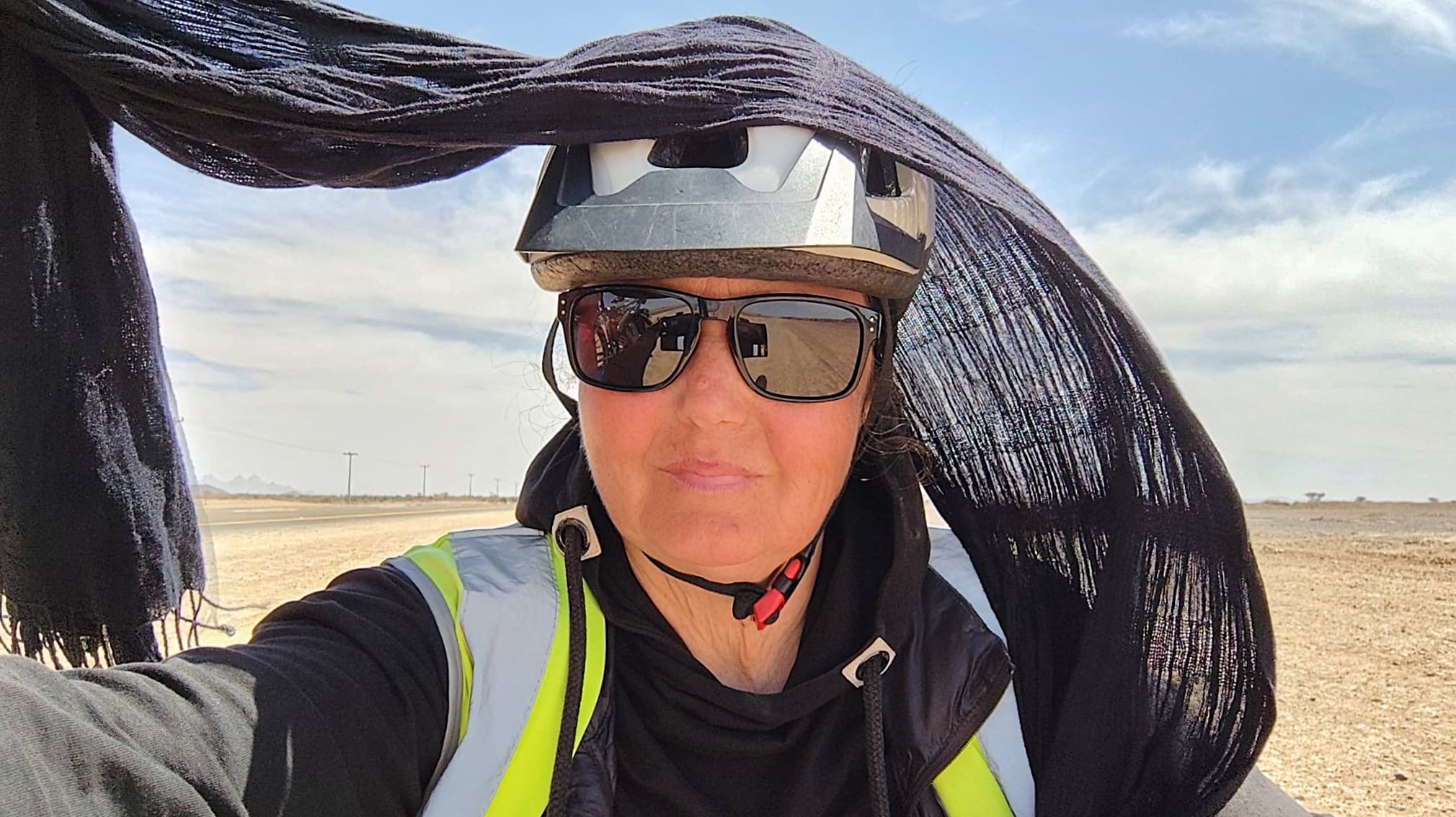
Anna began cycle touring at 49. Today, she hopes to ride through 100 countries. In late October and November, she completed the Dunav Ultra route, discovering unfamiliar corners of her home country and familiar feelings she had never quite forgotten. We speak while she is taking a break at a guesthouse on Lake Durankulak, looked after by welcoming hosts.
As she recalls arriving in Durankulak, Anna returns to a moment before the final checkpoint at the monument to the peasant uprising in the village centre. From Grekova Mogila, a hill about a kilometre outside the village, the Black Sea opens up before her. The day is clear and the blue on the horizon is intense. She stops, takes a photograph and stands looking out.
“It felt as though the sea was higher than the land,” she says.
After following the Danube and crossing South Dobruja, she has reached the Black Sea. This is where Dunav Ultra ends. Her own ride will continue to Istanbul.
Behind her are cycling journeys in 65 countries and roughly 55,000 kilometres, by her own reckoning. This particular trip, though, has an extra significance: it is the first time she has returned to Bulgaria by bike.
A Bicycle to Get There Faster
Anna was born in Sofia. She left Bulgaria in 1989 and lived in various parts of the world before settling in Switzerland. Travel backpacking has long been part of her life, but cycling came relatively late.
At 49, she decides to travel from Switzerland to Santiago de Compostela along the Camino. She starts working out the distance and the time involved. Walking would take months. A bicycle should be quicker, she reasons, and buys one.
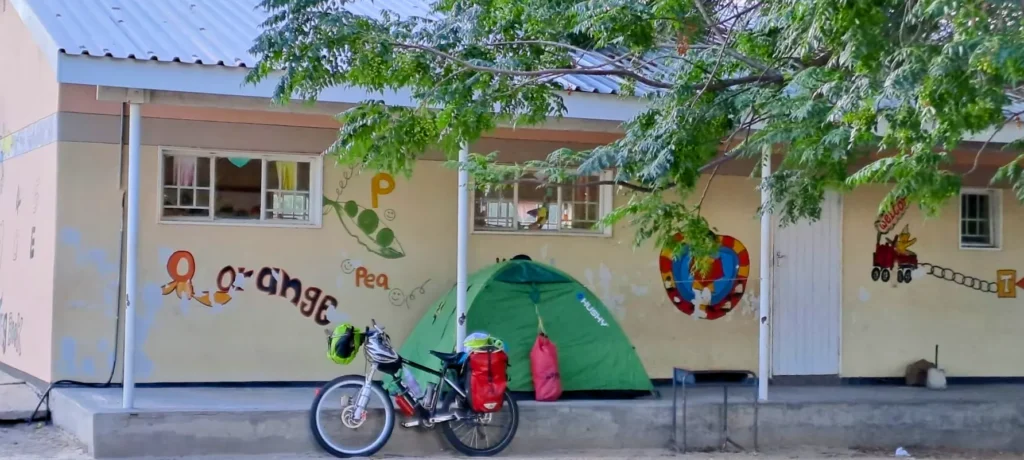
She then chooses to follow the walking trail. That means pushing uphill and, in places, carrying the bike downhill. Looking back, she says she would not make the same choice again. At the time, though, she covers around 2,300 kilometres in 41 days.
“They say people come back from the Camino changed. I became a cyclist.”
More journeys follow, and the distances grow: Prague, Berlin, Helsinki. Gradually, the bicycle becomes her usual way of setting off into the world.
One Hundred Countries, Teeth Intact
Her ambition to ride through 100 countries begins as a joke on Facebook. She writes that she will try to visit them by bike before her teeth fall out. A friend points out that you do not need teeth to cycle. Anna laughs, but eventually begins taking the idea seriously. After the first 50 countries, the rest start to feel possible.
Anna travels alone. Her explanation is practical: she rides slowly, likes stopping and wants to decide for herself when to move on.
“Nobody has to wait for me, I don’t have to wait for anyone, and I’m not putting anyone under pressure. I’m my own boss.”
For her, a bicycle moves at the right speed. It is faster than walking but gives you more time to notice your surroundings than a car. You can stop for a conversation, linger somewhere or change your plans for the day.
Africa: Sandy Roads and Elephants Ahead
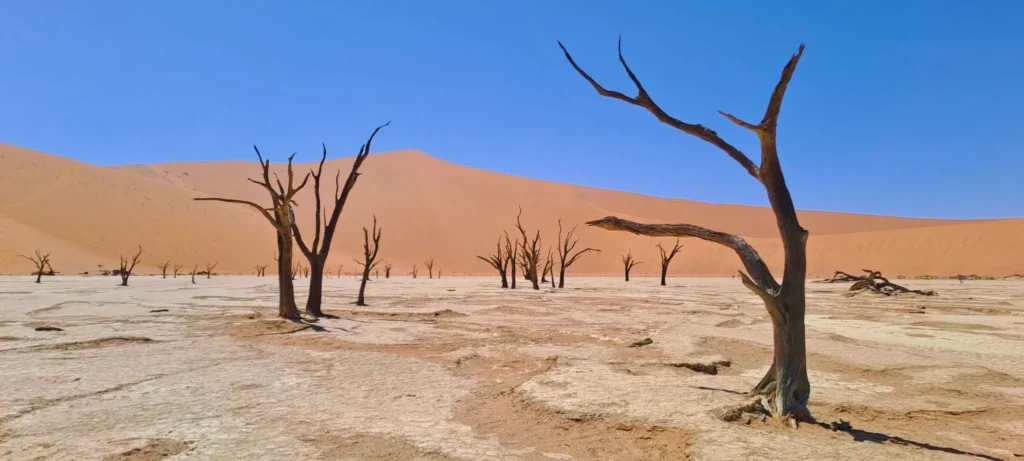
Asked which continent she feels most attached to, Anna chooses Africa. Before going, she expects a difficult and dangerous journey. Afterwards, she speaks fondly of the places she has ridden through and the solitude of its open spaces.
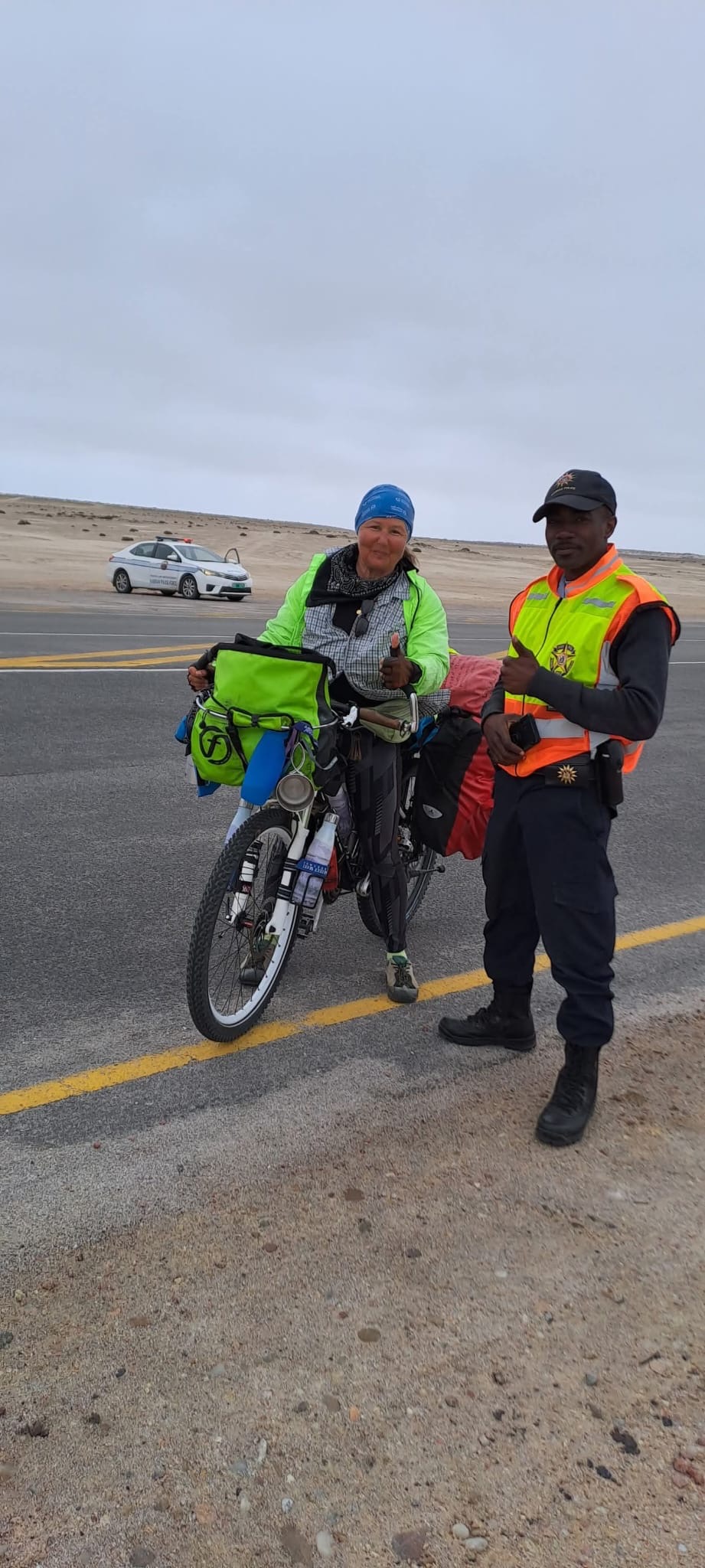
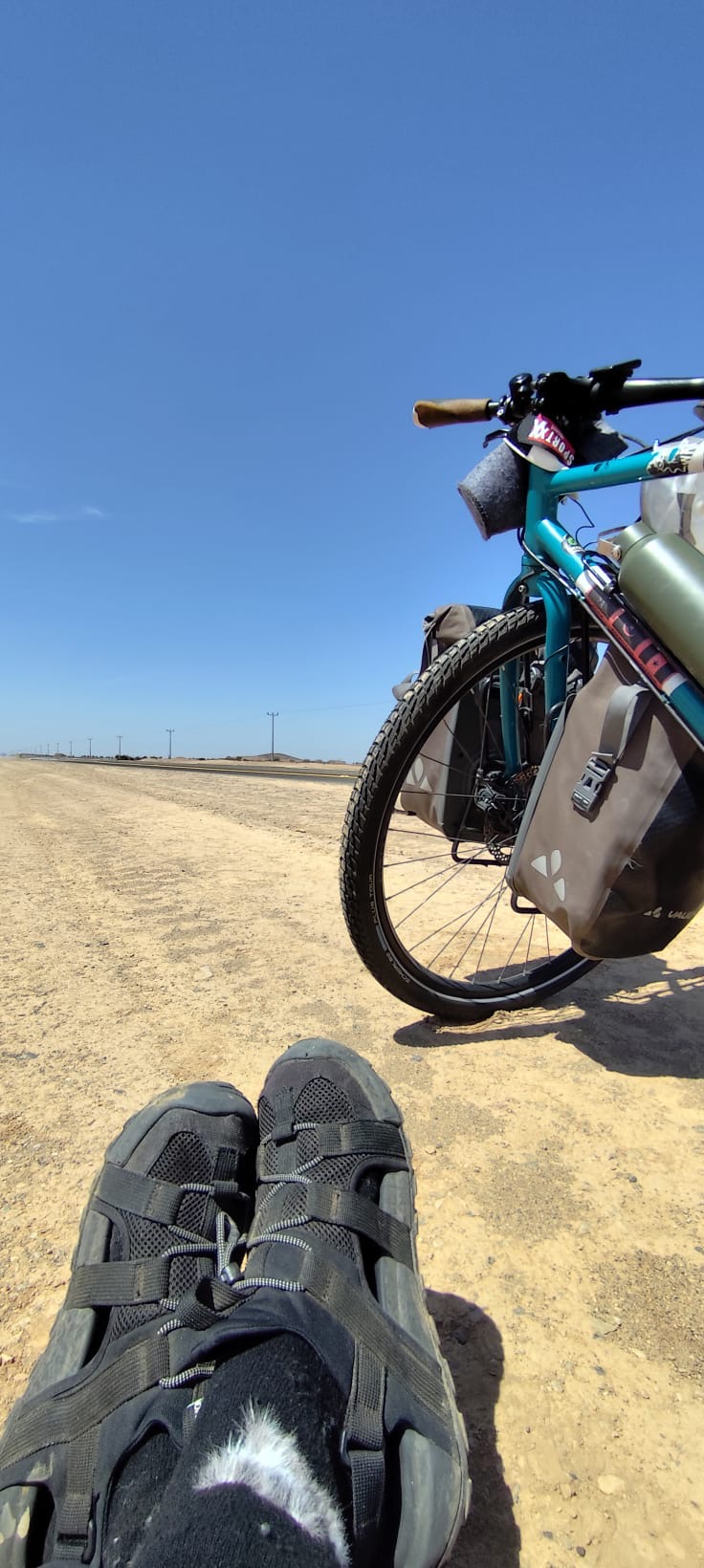
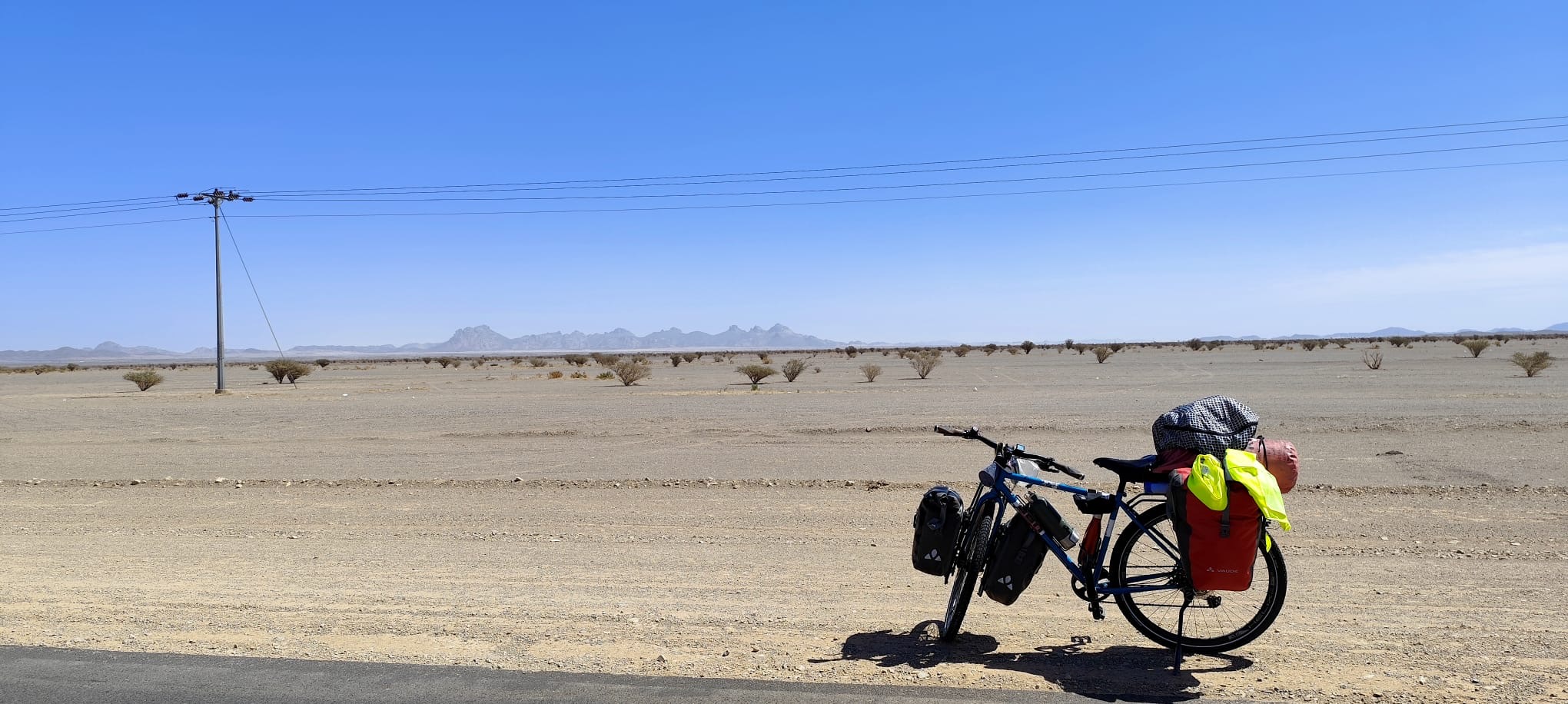
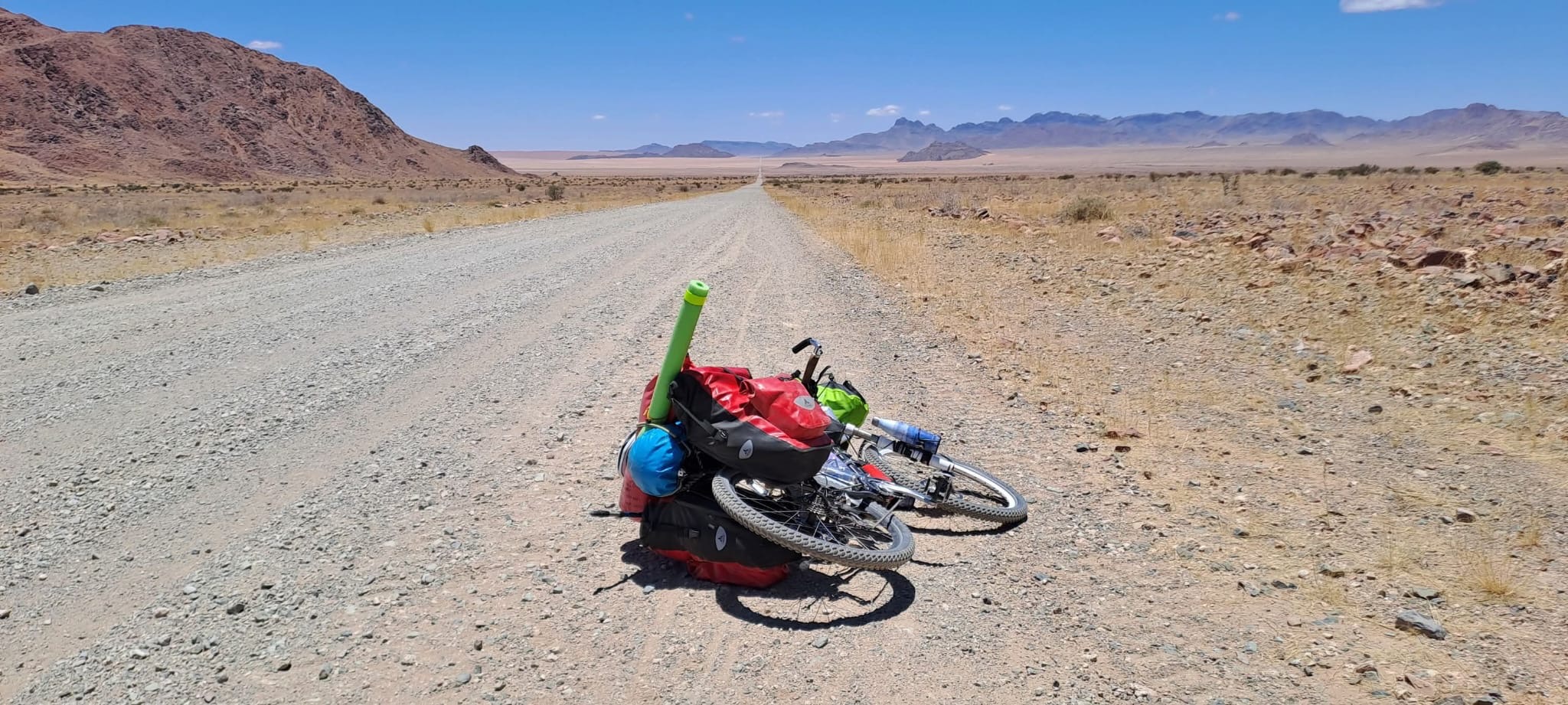
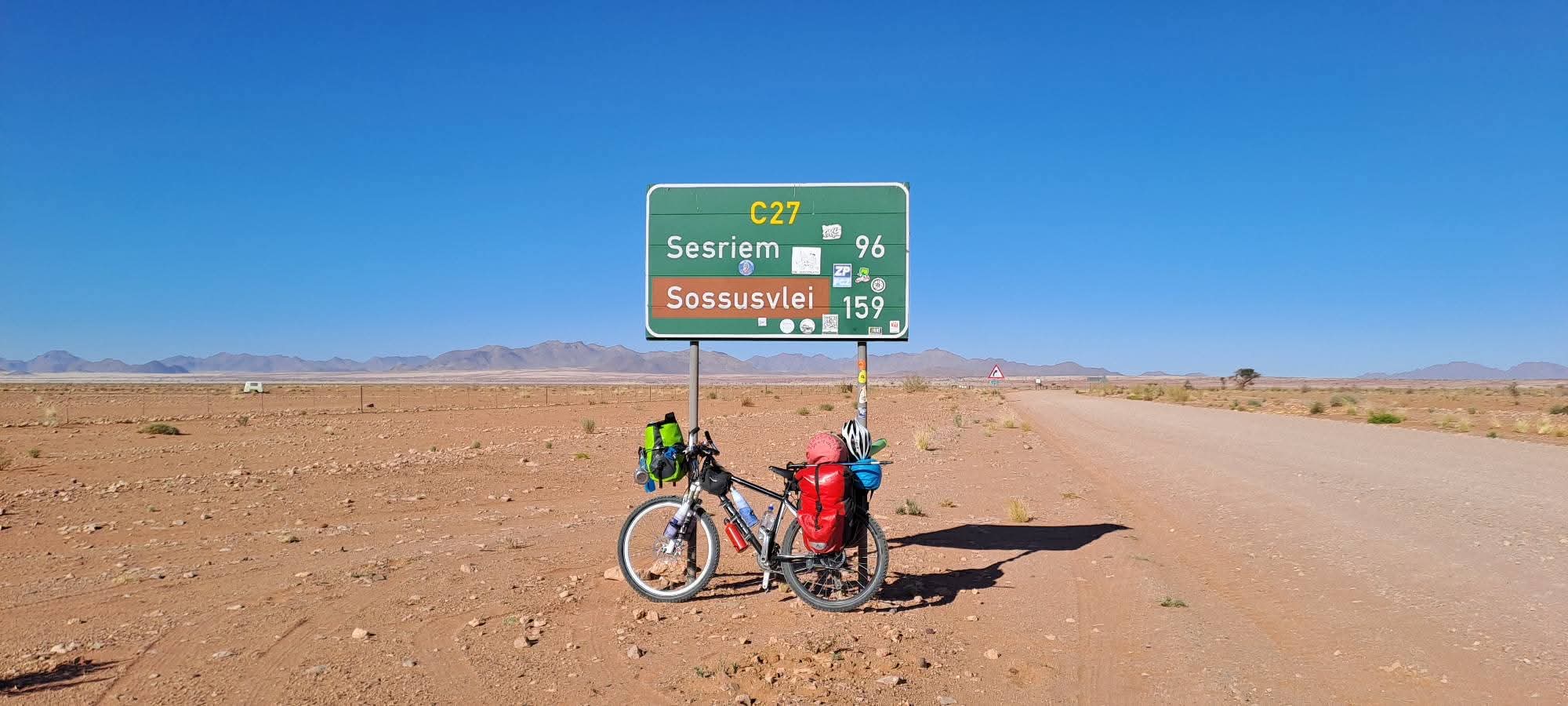
In her experience, Namibia is the hardest country to cycle in. To see what draws her there, she leaves the tarmac. Dirt roads, sand and long stretches without seeing another person follow. She does not consider herself particularly athletic and remembers the physical effort. But she also discovers that she loves the desert, its landscapes and the feeling of being alone in them.
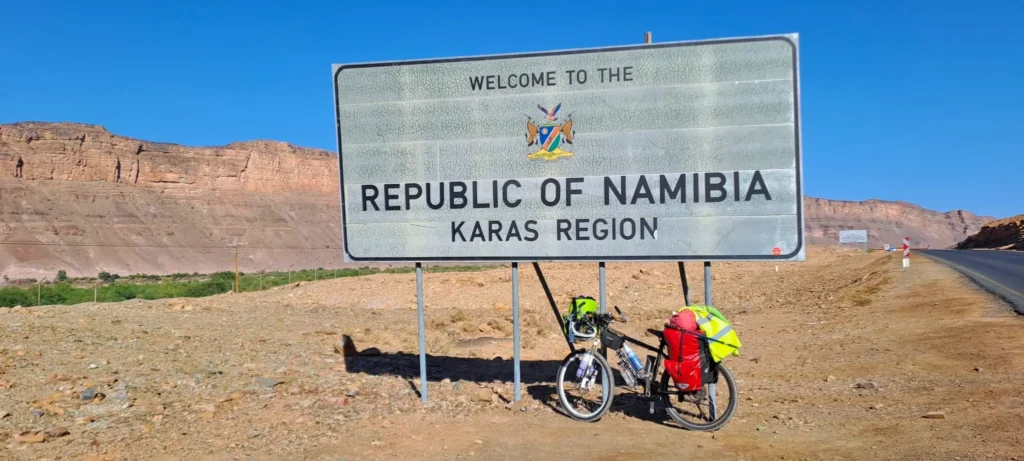
In Botswana, the solitude is interrupted by encounters of a very different kind. The first elephant to emerge from the bush in front of her brings her to a stop. She takes out her phone, but her hands are shaking. The photograph comes out blurred.
An elephant moves away from the road. Anna rides on, but the animal steps out again. She does not know whether to stop, turn back or keep going. She still remembers the hesitation. She continues and passes in front of it. Later, she is told she took a serious risk by crossing its path.
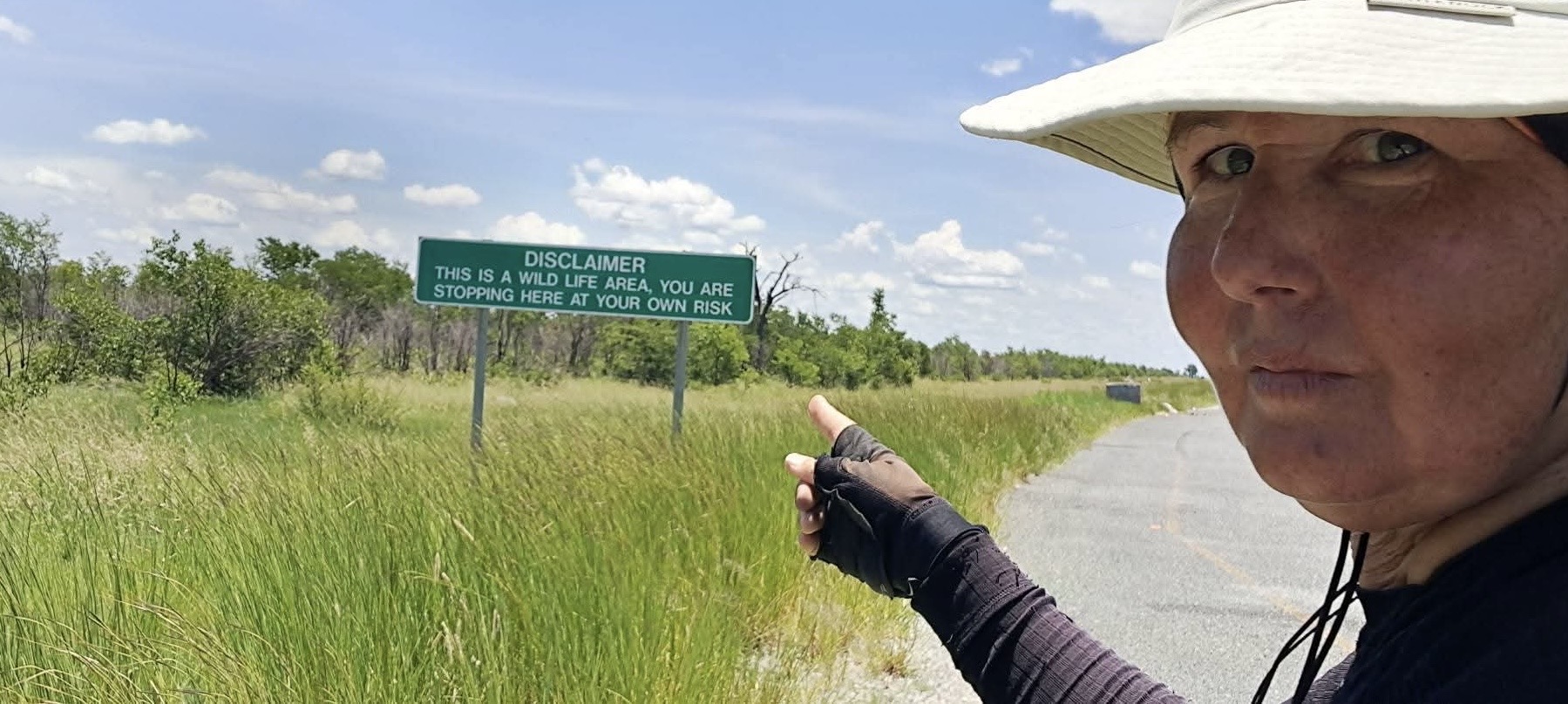
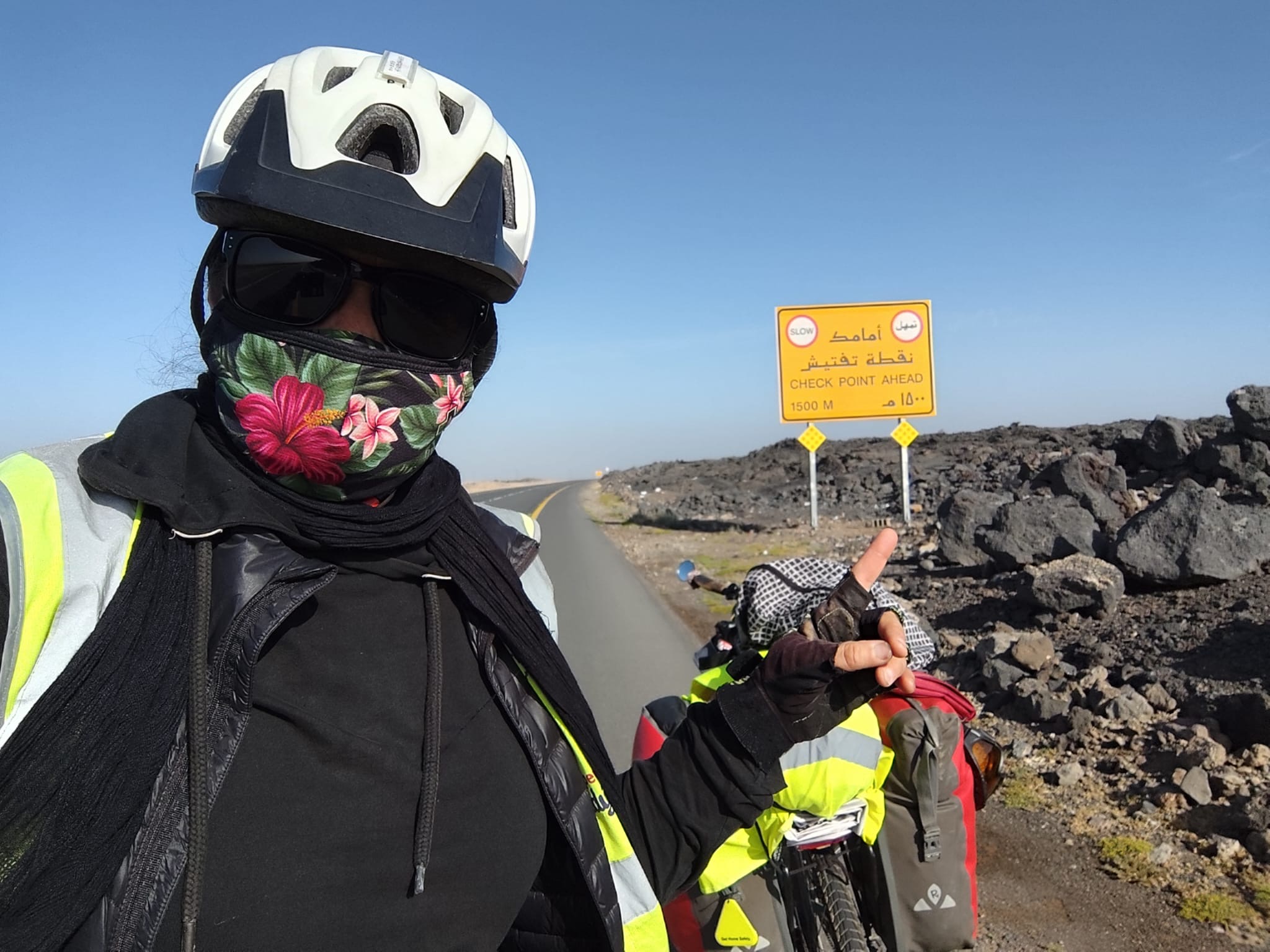
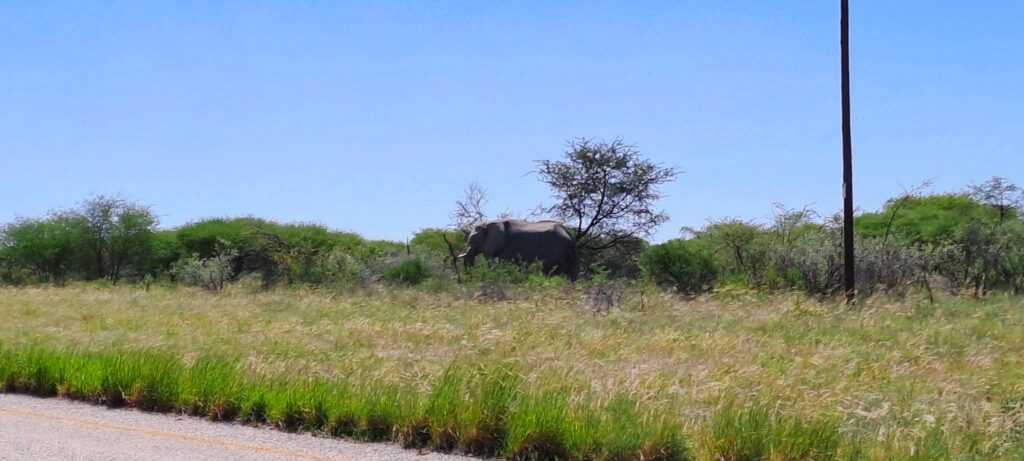
On a bicycle, there is no car to shelter inside. Anna remembers a sign warning motorists to stay in their vehicles because of the risk of encountering wild animals. She poses beside it with her bike.
Snakes are something she never gets used to. In South Africa, she sees them often beside the road. One of the most unsettling moments of her African travels involves two black mambas. Their bodies are intertwined on the road, moving. She stops, unsure what is happening. A car coming from behind overtakes her and runs them over.
Anna remembers both the relief as her fear subsides and sadness for the animals. She tells it as a moment when she did not know how to respond. Even after thousands of kilometres, she still encounters situations her experience has not prepared her for.
From Bali to Hong Kong
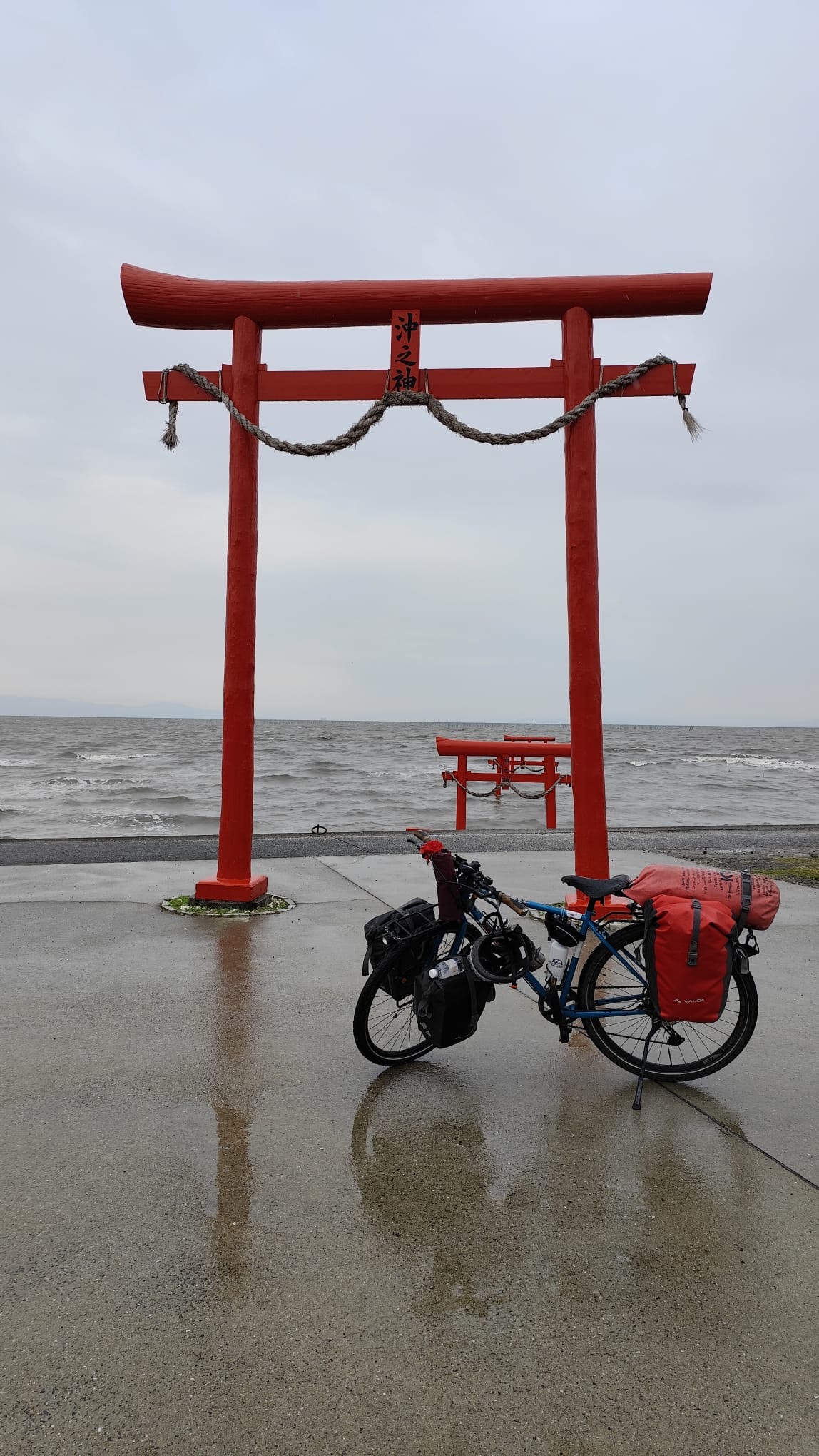
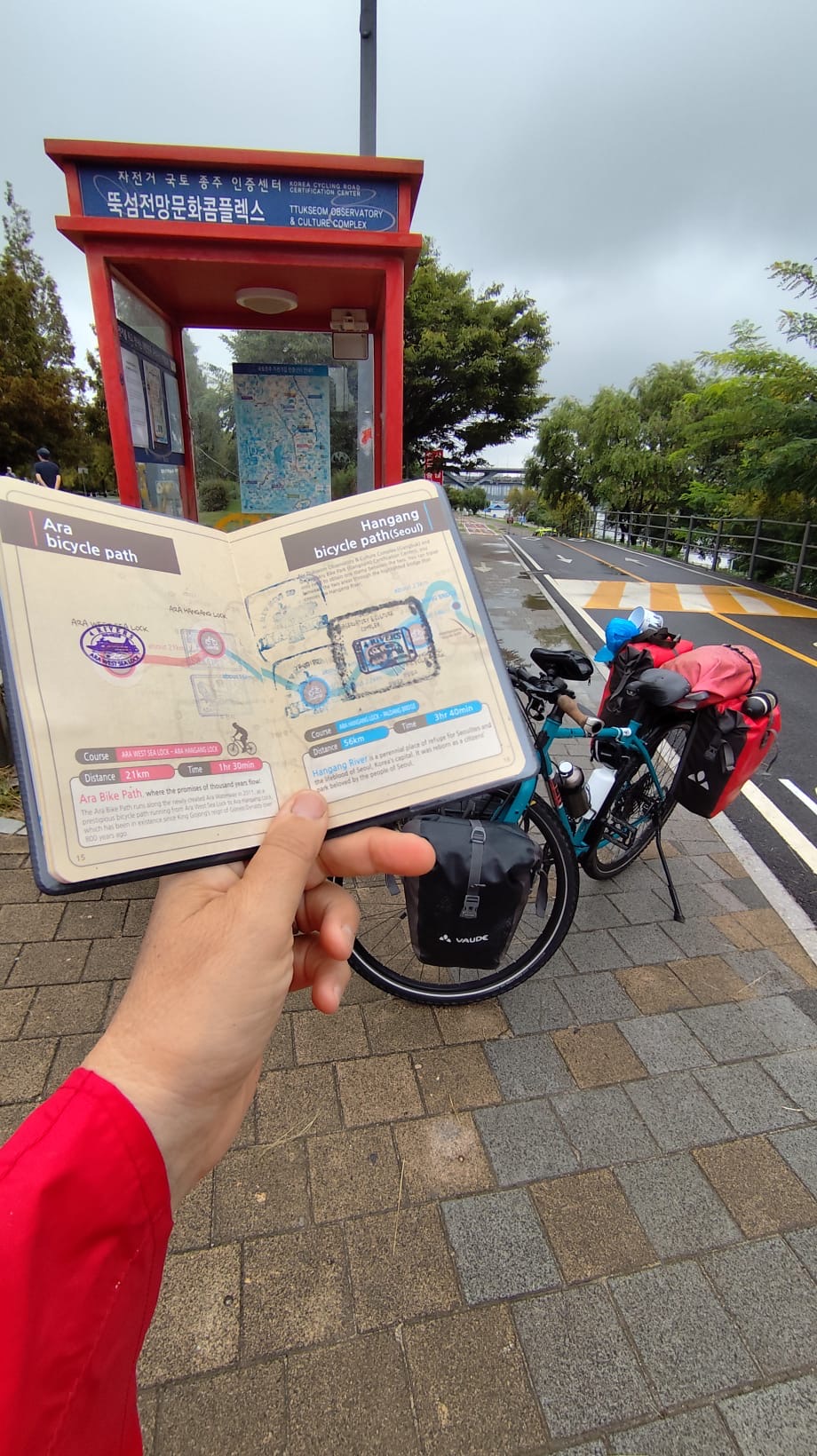
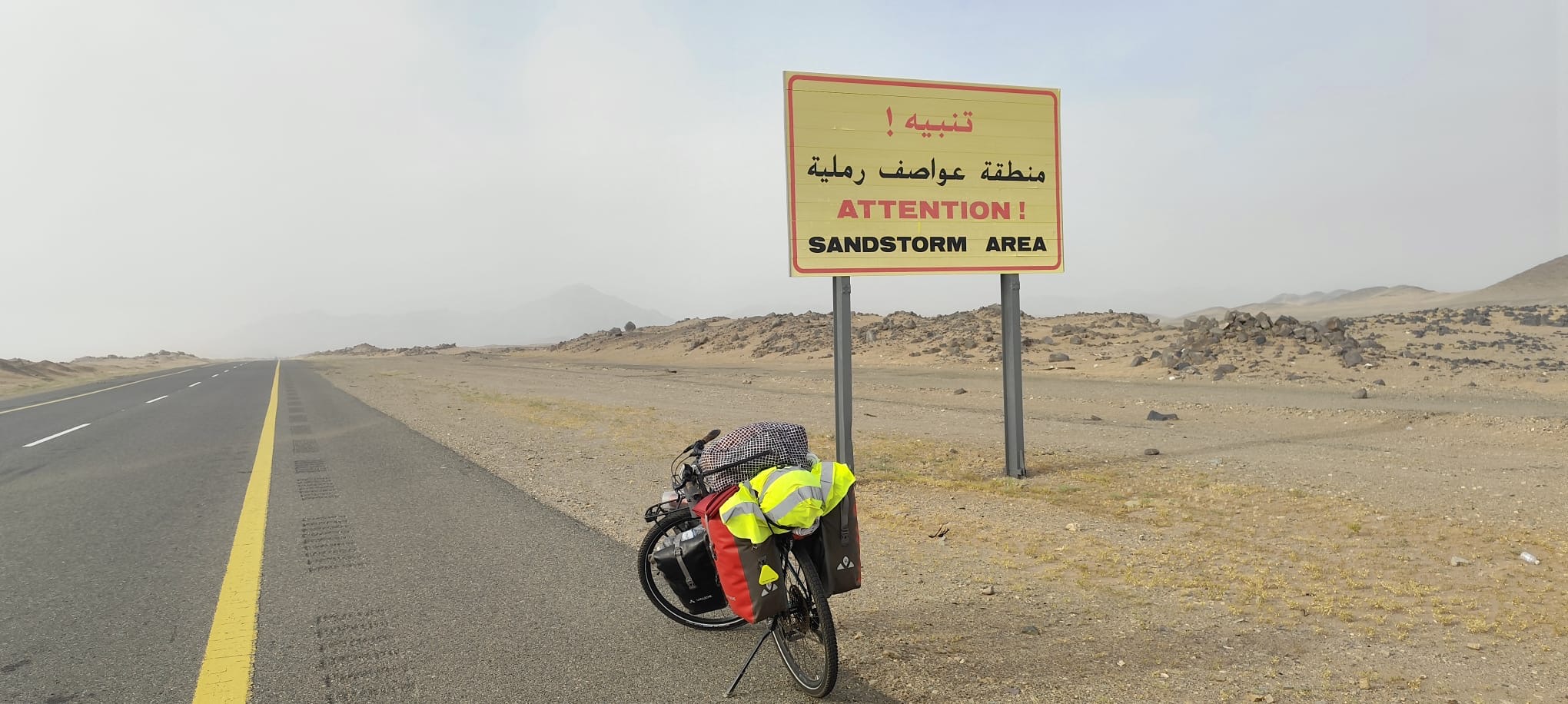
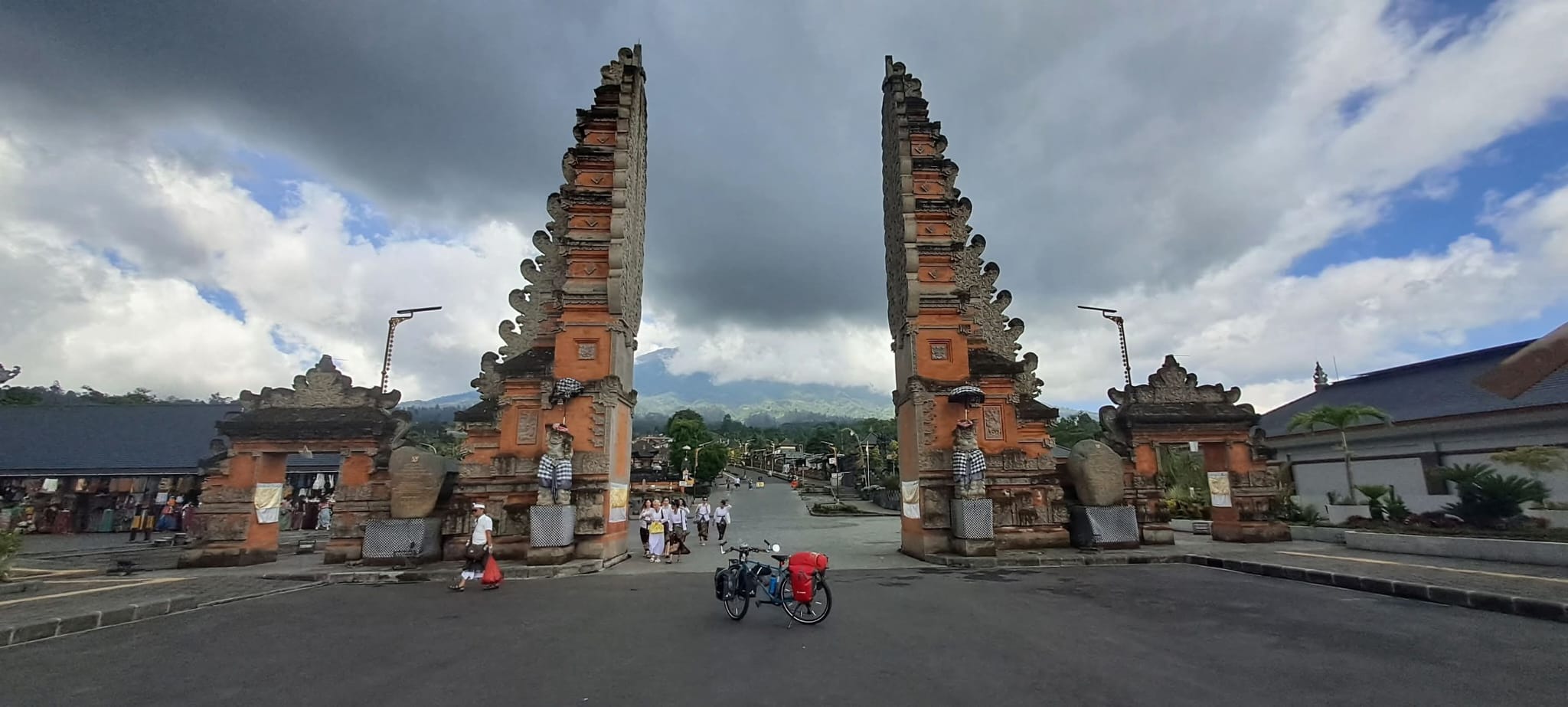
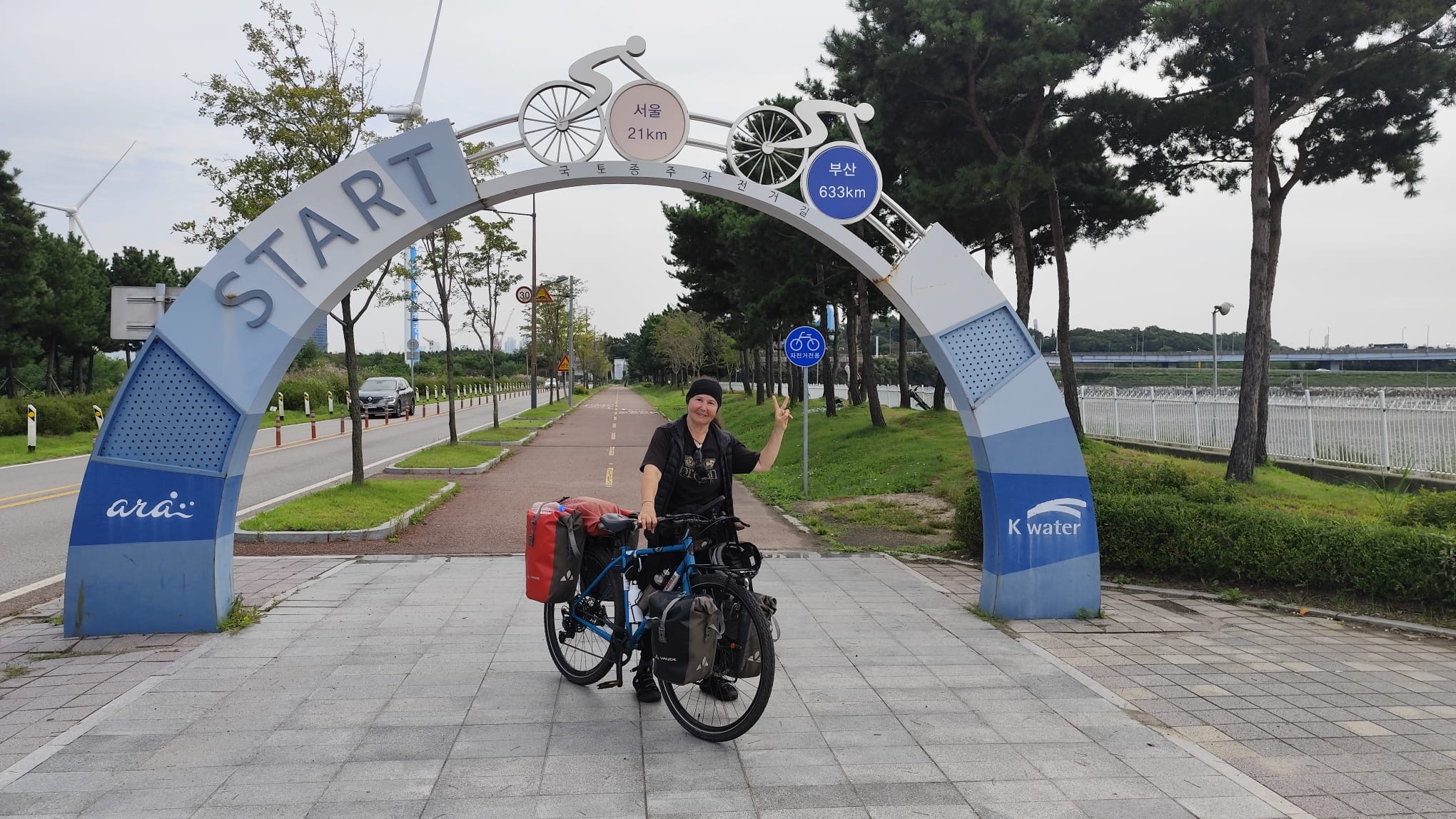
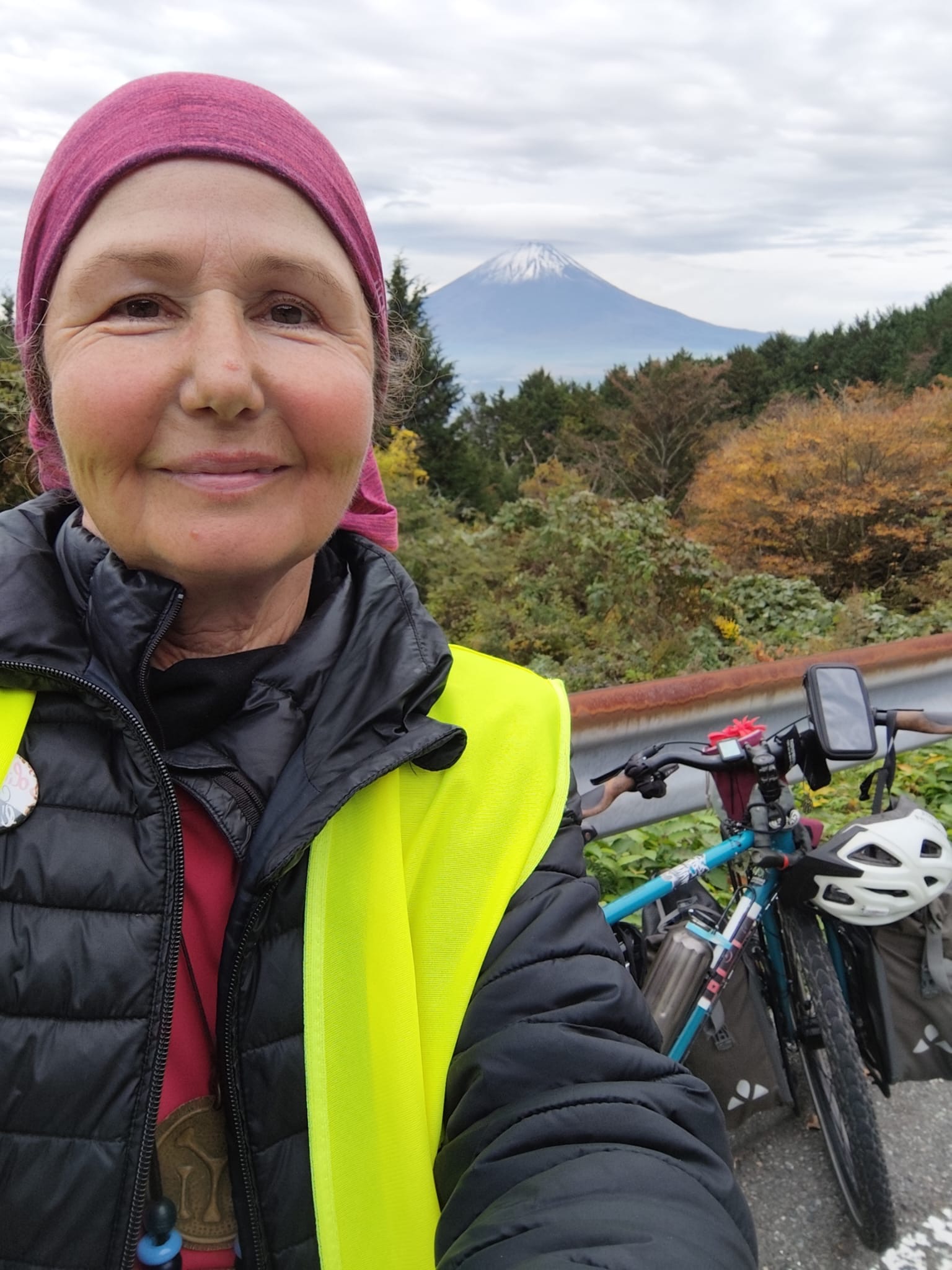
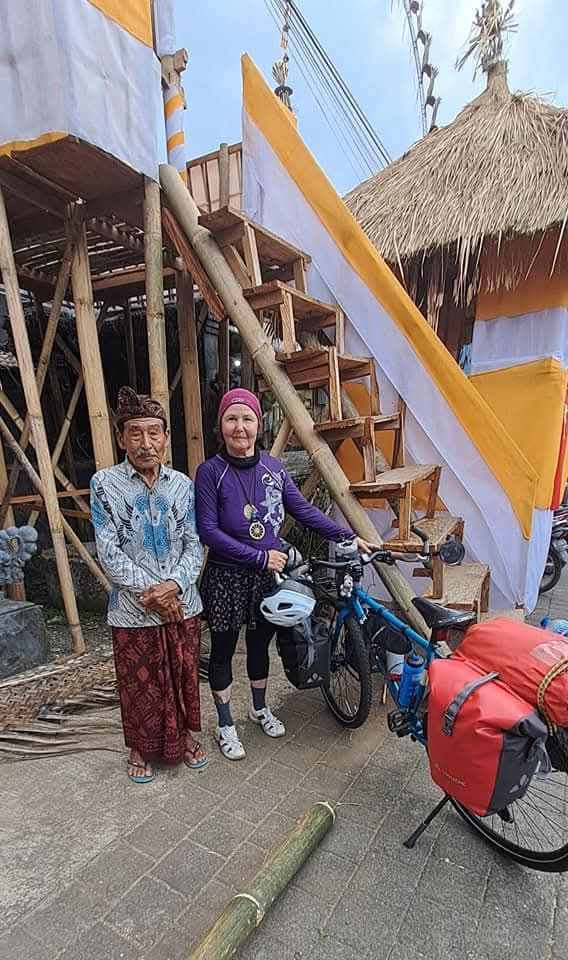
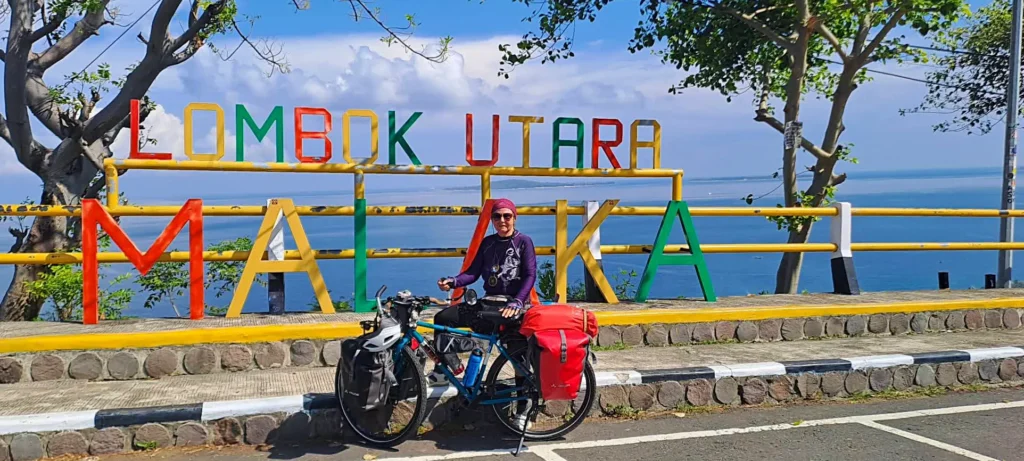
In Asia, her travels have taken her from Bali to Hong Kong. She has cycled in China, Japan and South Korea, as well as Oman and Jordan. The geography shifts quickly as she talks, but Anna does not dwell on her list of countries.
One of her longer journeys takes her from Switzerland to Armenia, around 6,000 kilometres by her reckoning. She rides through the Balkans, crosses Turkey and continues through Georgia. She also recalls the heavy traffic in Indonesia: a four-lane street where, as she describes it, everyone seems to choose their own direction. A very different challenge from Namibia’s sand or the wildlife encounters in Botswana.
Each journey adds to her experience. But when the conversation turns to what she remembers most vividly, Anna comes back to the people.
“It’s the people who stay with me,” she says.
She has photographs of hundreds of people she has met along the way. She starts putting them on a wall at home to hold on to their faces and stories. She does not keep a journal. Sometimes she would rather leave the camera in her bag than interrupt an encounter. She remembers it without a photograph, too.
Hearing Her Own Language at the Border
Her current journey starts in Vienna and follows the Danube, including sections of EuroVelo 6. Istanbul is the destination, but Bulgaria is an important part of the plan.
There is unfinished business along the way. On a previous ride from Switzerland, Anna reaches Bratislava, but pandemic restrictions and testing requirements put her off continuing. Now she returns to that journey and rides beyond her earlier stopping point. She has wanted to cycle to Bulgaria for a long time. When she mentions the idea, she hears warnings that it is dangerous and there is nowhere to ride. She starts looking for more information.
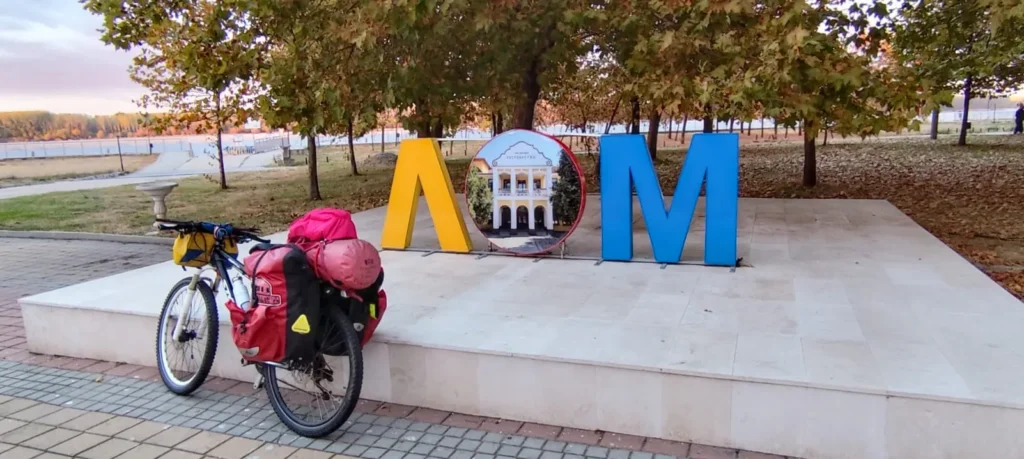
A friend tells her about Dunav Ultra. Anna finds a route across northern Bulgaria to the sea. She enters the country at Bregovo. At the border post, she hears Bulgarian. The officers call to one another about “some woman” who has arrived with a bicycle. The feeling is immediate: she understands the words and recognises the way people speak to each other.
“Suddenly, I felt at home. I wasn’t somewhere foreign.”
Then come the familiar flavours: sudzhuk, a cured sausage; kashkaval cheese; banitsa, a savoury pastry; and jam-filled rolls. She buys them along the way, remembering her childhood. In shops, people sometimes greet her in English. Her loaded touring bike makes them assume she is a foreign visitor. When she replies in Bulgarian, the conversation takes a different turn.
A Familiar Country, an Unfamiliar North
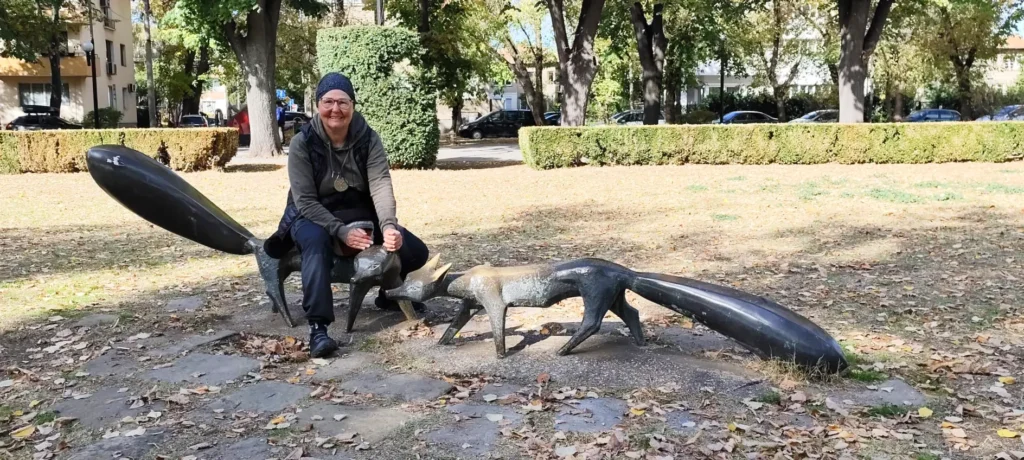
Anna has childhood memories of Vidin, where her mother worked at the town’s theatre. She remembers playing around the bronze fox sculptures in the riverside park. Much of northern Bulgaria, however, is new to her.
She notices old façades and the dates inscribed on them. She also sees houses with collapsed roofs, deserted yards and traces of lives that have dwindled or disappeared. She is struck by the neglected, half-empty villages and the poverty she encounters. She does not leave these impressions out of her account. But she says she wants to observe without judging.
“There’s so much potential here,” says Anna, who has now travelled through 65 countries.
Then she returns to the well-kept places, the flowers and the people who care for their homes. She stops to talk to a cabbage grower and learns about his work. She visits people, talks and receives help. In Ruse, two hosts, both named Milen, are among those she remembers with gratitude. One rides with her for part of the way towards Tutrakan.
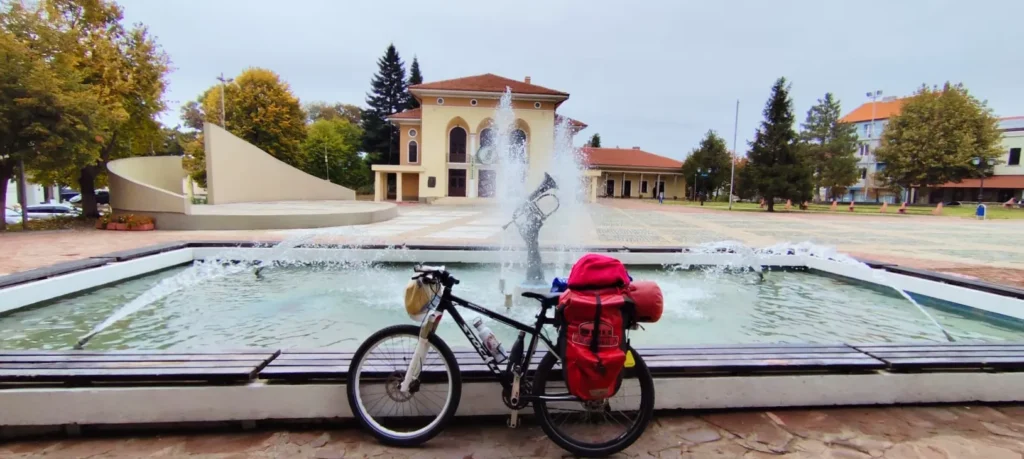
These encounters join the memories of her other travels. In Bulgaria, though, the conversations are in her own language. She also remembers sharing a glass of rakia with Velichko, affectionately known as Uncle Velichko, in the Danube village of Gigen, and the warm welcome at Seltseto campsite in Kamentsi, a village in Dobruja.
The Dunav Ultra Adventure: Checkpoints and the Next Day’s Ride
Along the route, Anna uses the Dunav Ultra App to check in at locations along the way. She likes having another place to aim for and collecting a record of her journey. Dunav Ultra reminds her of the Camino stamps and the certificate from that first journey, which hangs on her wall. She wants to put her Dunav Ultra certificate beside it.
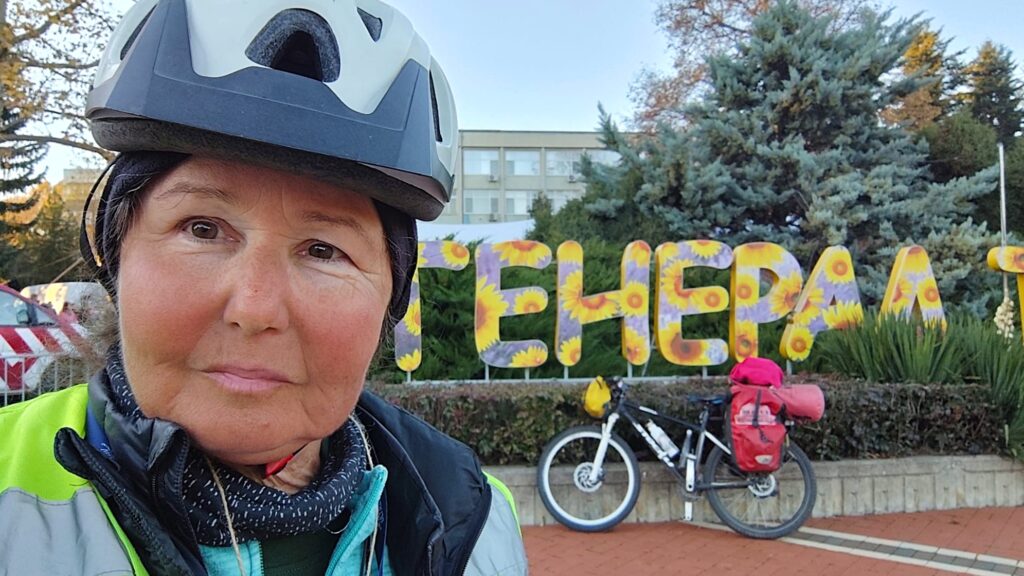
She takes the terrain and climbs as they come. Where she can, she rides. Where it gets difficult, she gets off and pushes.
“I ride, I push, I walk. It’s not a problem.”
She has nothing to prove about how quickly she can complete the route.
She also meets people who think Dunav Ultra finished in the summer. She finds it strange that local people do not realise there is no fixed date for riding the route. Her journey takes place outside the annual event, at her own pace, with her own stops and a clear direction even beyond Durankulak.
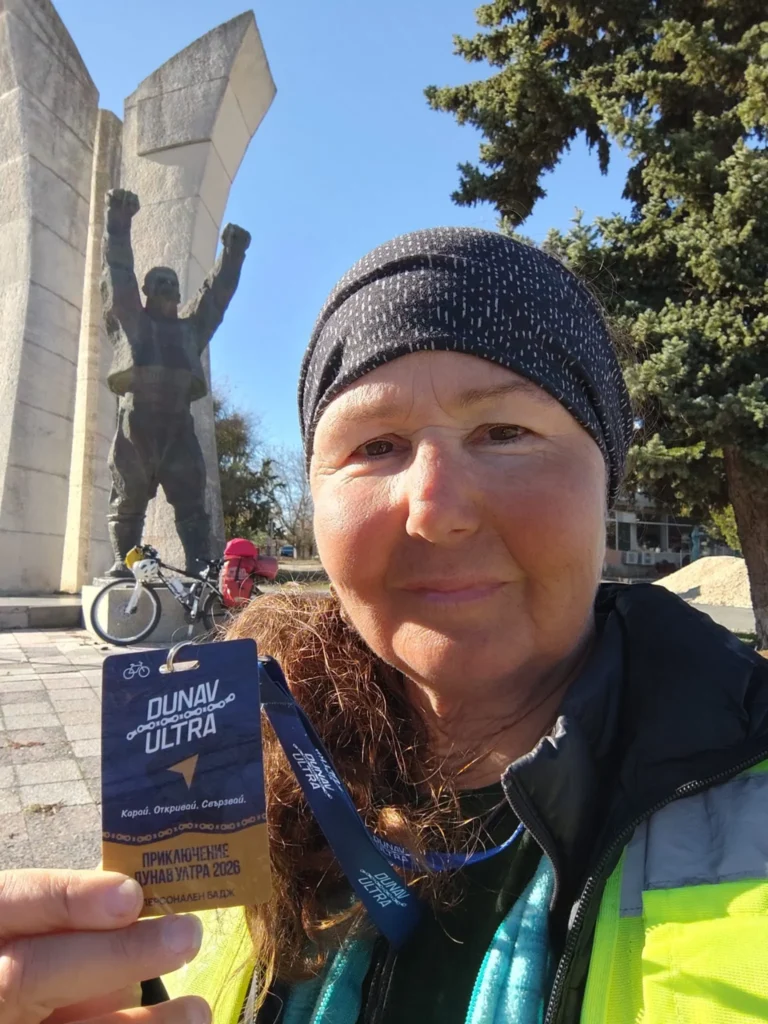
By the time she reaches the sea, Anna has completed Dunav Ultra, but there is more road ahead. Next comes Istanbul. Another 35 countries remain before she reaches her goal of 100.
Earlier, in Hungary, she meets an American couple also travelling by bicycle. He is 75; she is 78. Their story reassures her that there is time for many more journeys.
For now, she stops before the blue line of the Black Sea. Takes a photograph. Looks towards the horizon. And rides on.